
Paver Walkway Installation in
Denham Springs, LA
Denham Springs Paver Pros designs and installs paver sidewalks and walkways for homeowners throughout Denham Springs and the surrounding Livingston Parish area. From front entrance walkways to backyard pathways, we build sidewalks that are safe, level, and built to last.
500+
Projects Completed
25+
Years Of Experience
4.9★
Average Review Rating
48hr
Estimate Turnaround
What Is a Paver Sidewalk and Who Needs One?
A paver sidewalk is a walkway built from individually laid interlocking stones set over a compacted gravel and sand base, rather than a single poured strip of concrete. This construction allows the walkway to shift slightly with the ground beneath it instead of cracking the way rigid concrete often does.
Homeowners typically consider a paver sidewalk when their existing concrete walkway has cracked, become uneven, or created a tripping hazard near the front entrance or throughout the yard. Others are building a walkway for the first time, connecting a driveway to a front door, or creating a path between different areas of the backyard, such as from a patio to a fire pit or pool deck.
The benefits go beyond just appearance. A properly built paver walkway provides better footing than smooth or cracked concrete, drains water away rather than allowing it to pool along the path, and can be repaired section by section if a single paver is ever damaged, without needing to replace the entire walkway.
When Should You Consider Replacing or Adding a Sidewalk?
Homeowners in Denham Springs typically look into a new or replacement sidewalk when they notice cracking, uneven sections, or shifting slabs along an existing concrete path. These issues often start subtly, a slightly raised edge here or a hairline crack there, but they tend to get worse as the ground continues to move with Louisiana's wet and dry seasons.
An uneven or cracked walkway is more than just a cosmetic issue. It becomes a genuine tripping hazard, particularly for elderly family members, young children, or anyone walking the path at night without clear visibility of the surface. Left unaddressed, a damaged walkway can also allow water to collect and erode the soil underneath, making the problem worse over time.
Homeowners without an existing walkway often reach out when they're tired of walking across muddy or uneven grass to get from the driveway to the front door, or when they're finalizing a larger backyard project and want a defined path connecting different outdoor spaces. Addressing walkway issues sooner rather than later helps avoid both safety concerns and larger repair costs down the road.
How We Build Your Paver Walkway, Step by Step
Every project starts with a free on-site estimate, where we evaluate the desired path, discuss width and paver style preferences, and assess how the walkway will connect to existing features like a driveway, porch, or patio. Proper planning at this stage ensures the finished walkway integrates naturally with the rest of your property.
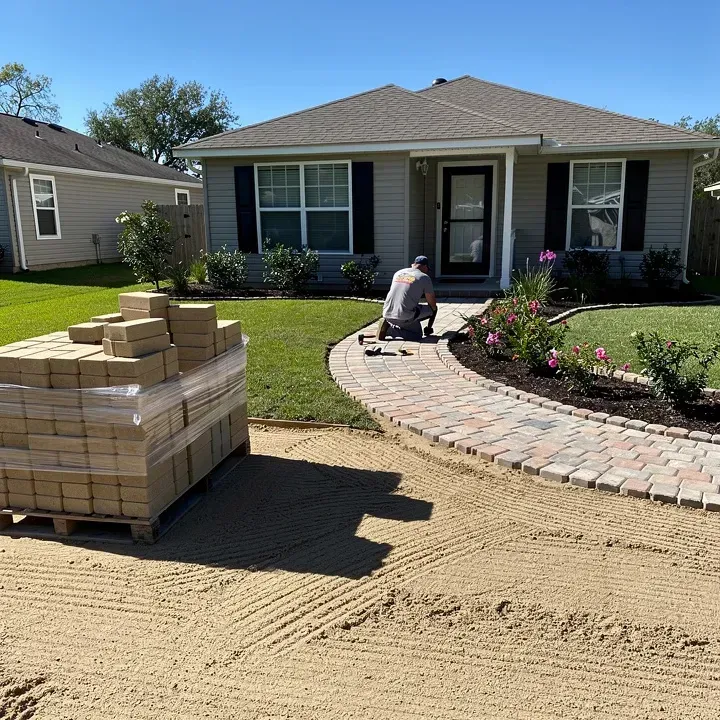
Once the design is finalized, our crew excavates the walkway path to the appropriate depth, removing any grass, soil, or old concrete along the route. A compacted layer of crushed gravel is then installed to create a stable base that resists shifting and settling over time.
A layer of leveling sand goes on top of the gravel base, screeded evenly along the entire length of the walkway. Pavers are then laid by hand in the chosen pattern, cut precisely to fit any curves, edges, or transitions to existing surfaces.
Once all pavers are set, we compact the surface with a plate compactor, sweep polymeric sand into the joints to lock everything in place, and complete a final compaction pass. The result is a clean, level walkway that's immediately ready for foot traffic.
Understanding the Cost of Your Paver Sidewalk Project
Several factors influence the final price of a paver sidewalk project. Length and width of the walkway are the primary drivers of cost, since a longer or wider path naturally requires more material and labor to complete. Even a modest increase in width, say from three feet to four feet, can add up meaningfully over the full length of a walkway.
The type of paver chosen also affects pricing, as specialty shapes, textures, or colors cost more than standard options. Homeowners looking for a walkway that closely matches an existing patio or driveway design should factor this into their budget expectations, since coordinating paver styles across multiple areas of a property sometimes means sourcing a specific product line rather than the most economical option available.
Site conditions matter as well. A path that requires significant excavation, navigates around existing landscaping or tree roots, or includes curves and transitions will take more time and precision than a straight, simple walkway. Removing an old concrete walkway before installing pavers also adds to the labor involved, since that demolition and haul-off work has to happen before base preparation can even begin. Access to the work area plays a role too. A walkway in a fenced backyard with limited equipment access may require more manual labor than one along an open front yard.
Finally, any additional touches, such as decorative border pavers, lighting integration, or steps to accommodate a change in elevation, will add to the overall project cost. We review all of these details during your free estimate so you have a clear and accurate picture of the cost before work begins.
Frequently Asked Questions
How wide should my paver walkway be?
Most residential walkways range from three to four feet wide, which comfortably fits one person walking with room to spare, or two people walking side by side on the wider end of that range. Front entrance walkways often benefit from the wider option to create a more welcoming feel, while side yard or garden paths can be narrower depending on their purpose. We'll help you determine the right width based on how the walkway will be used during your estimate.
Will my paver sidewalk be safe to walk on when wet?
Yes, paver surfaces used for walkways typically have a naturally textured finish that provides solid traction even in wet conditions, which is a notable improvement over smooth, worn concrete. We also ensure proper grading so water drains away from the walkway rather than pooling on the surface, further reducing any slip risk during Louisiana's frequent rain showers.
Can a paver walkway be curved instead of straight?
Absolutely. Paver installations offer far more design flexibility than poured concrete, which makes curved or winding paths easy to achieve without the joint and formwork limitations concrete requires. Many homeowners choose a curved walkway to complement garden beds or create a more natural, inviting feel through the yard. We can incorporate curves, width changes, and pattern variations into your design based on your property's layout.
How long does a typical sidewalk installation take?
Most standard walkway projects take one to three days to complete, depending on the length and complexity of the path. Straightforward, shorter walkways can often be finished in a single day, while longer paths or those involving significant excavation and curves may take a bit longer. We'll give you a specific estimate for your project's timeline during your free on-site consultation.
Ready to Transform Your Outdoor Space?
Whether you're dealing with a cracked patio, a driveway that floods every time it rains, or you're finally ready to build the backyard you've been picturing, we're here to help. Reach out today for a free, no-obligation estimate and let's talk about what's possible for your property. There's no pressure, just an honest conversation about your project and how we can make it happen.


Information
(225) 427-8410
Mon–Sat: 7am–7pm
Denham Springs, LA
Who We Are
Denham Springs Paver Pros is a locally owned and operated hardscaping contractor with more than 25 years of experience helping homeowners improve their outdoor living spaces. We proudly serve Denham Springs and the surrounding Livingston Parish and greater Baton Rouge area, bringing quality craftsmanship and honest service to every project we take on.
© Copyright 2026 Denham Springs Paver Pros. All rights reserved.
© Copyright 2026 Denham Springs Paver Pros.
All rights reserved.