
Paver Patio Installation in
Denham Springs, LA
Denham Springs Paver Pros designs and installs custom paver patios for homeowners throughout Denham Springs and the surrounding Livingston Parish area. From small backyard retreats to full outdoor living spaces, we build patios that hold up to Louisiana's climate for years to come.
500+
Projects Completed
25+
Years Of Experience
4.9★
Average Review Rating
48hr
Estimate Turnaround
Is a Paver Patio Right for Your Home?
A paver patio is an outdoor living surface built from individually laid interlocking stones set over a compacted gravel and sand base, rather than a single poured concrete slab. This method of construction is fundamentally different from traditional concrete, and that difference is exactly what makes pavers so well suited to a climate like ours.
Homeowners typically look into a paver patio when their existing concrete patio has cracked or sunk, when they have a plain backyard with no defined outdoor living space, or when they simply want to upgrade their property with an area suited for entertaining, dining, or relaxing outside. Others come to us after years of watching a bare grass area turn to mud every time it rains, ready to finally create a usable, all-weather space.
The benefits go well beyond looks. A properly built paver patio drains better than concrete, resists cracking as the ground shifts through the seasons, and can be repaired section by section if any part is ever damaged, rather than requiring a full replacement. For most homeowners, that combination of durability and long-term flexibility is what ultimately makes the decision easy.
When Should You Consider Replacing or Adding a Patio?
Homeowners in Denham Springs typically need a new or replacement patio when they notice cracking, uneven settling, or standing water pooling near the house after a rainstorm. These issues tend to show up gradually at first, a small crack here, a slightly sunken corner there, but they rarely stay small.
As the underlying soil continues to shift with Louisiana's wet and dry seasons, a compromised concrete slab will keep deteriorating. Left unaddressed, it eventually becomes a tripping hazard or a visible eyesore that affects the overall value and curb appeal of the home. Water that pools near the foundation can also lead to more serious moisture problems over time.
Homeowners without any existing patio often reach out when they're finally ready to actually use their backyard, whether that's for family cookouts, kids playing outside, or simply having a comfortable place to sit in the evening. Waiting too long to address a failing patio, or to add one in the first place, usually means dealing with a larger repair bill down the road, since water infiltration and soil erosion under a cracked slab tend to compound year after year.
From Design to Finished Patio: Our Process
Every project starts with a free on-site estimate, where we assess your yard's drainage, soil condition, and discuss the layout and paver style you have in mind. This is also the stage where we talk through any additional features you might want, such as a fire pit or seating wall, so the entire space can be designed cohesively from the start.
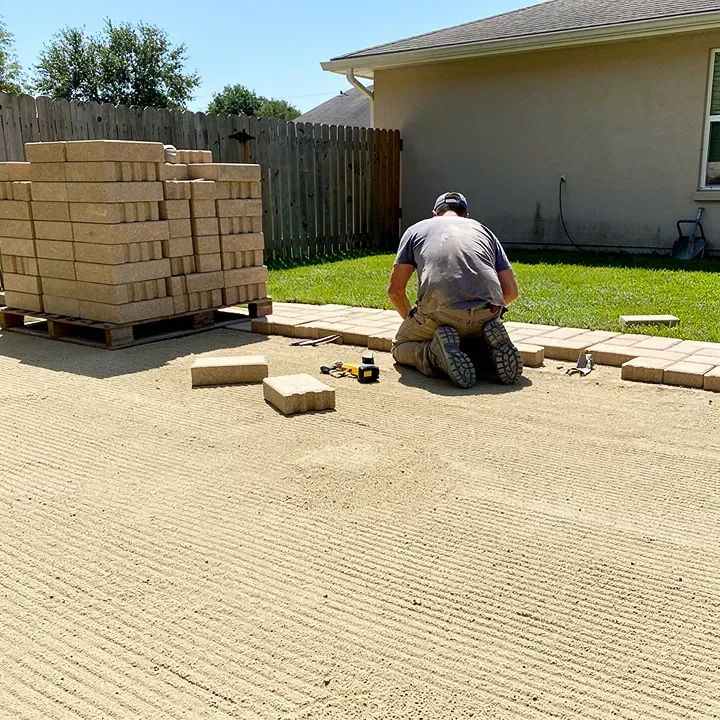
Once the design is finalized, our crew excavates the patio area to the proper depth, typically several inches deeper than the finished paver surface to accommodate the base materials. We then install and compact a layer of crushed gravel, which forms the structural foundation that keeps the patio stable and prevents future settling.
A layer of leveling sand goes on top of the gravel base, screeded to an even, precise depth. From there, pavers are laid by hand in the chosen pattern, cut as needed around edges and obstacles like downspouts or utility covers.
Once all pavers are in place, we compact the entire surface with a plate compactor, sweep polymeric sand into the joints to lock everything together, and do a final compaction pass to set the sand. The result is a solid, professionally finished patio ready for use almost immediately.
Understanding the Cost of Your Paver Patio Project
Several factors influence the final price of a paver patio project, and understanding them helps homeowners know what to expect before requesting an estimate. Square footage is usually the biggest factor, since larger patios require more material and labor hours from start to finish.
The type of paver chosen also plays a significant role, as premium or specialty pavers with unique textures, colors, or shapes cost more than standard options. Homeowners who want a more custom look should expect that to be reflected in the material cost.
Site conditions matter too. A yard with poor existing drainage, significant slope, or difficult access for equipment can increase excavation and base preparation costs, since more labor and material may be needed to properly prepare the foundation.
The complexity of the design is another factor, since intricate patterns, curved edges, or multiple paver colors require more cutting and precision than a simple rectangular layout. Finally, any additional features like built-in seating walls, steps, or integrated lighting will add to the overall project cost. We break all of this down clearly during your free estimate so there are no surprises once work begins.
Frequently Asked Questions
How long will my new paver patio last?
When installed correctly with a proper gravel base and adequate drainage, a paver patio can easily last 25 to 30 years or more, even in Louisiana's demanding climate. The interlocking design allows the surface to flex slightly with ground movement rather than cracking outright, which is a major reason pavers tend to outlast poured concrete in this region. Routine maintenance like periodic joint sand refills and occasional resealing will help maximize that lifespan.
Will my paver patio get slippery when it rains?
No, and this is actually one of the advantages of pavers over smooth concrete or certain natural stone options. Most paver products used for patios have a naturally textured surface that provides good traction even when wet. We also make sure the patio is graded properly so water drains away rather than pooling on the surface, which further reduces any slip risk during Louisiana's frequent rain showers.
Can I add a fire pit or seating wall to my patio design?
Absolutely. Many homeowners choose to incorporate a built-in fire pit, a low seating wall, or even a small paver walkway connecting the patio to another part of the yard, such as a pool deck or driveway. These additions are easiest to plan for during the initial design phase, so if you're interested in expanding beyond a basic patio, let us know during your estimate and we'll design the space to accommodate it from the start.
What happens if a paver ever cracks or gets stained?
One of the biggest practical advantages of a paver patio is repairability. If an individual paver ever cracks from heavy impact or develops a stubborn stain, it can simply be removed and replaced without disturbing the rest of the patio. This is a significant difference from poured concrete, where a crack or stain typically means living with it or replacing an entire section of the slab. We recommend keeping a few extra matching pavers on hand after installation for exactly this reason.
Ready to Transform Your Outdoor Space?
Whether you're dealing with a cracked patio, a driveway that floods every time it rains, or you're finally ready to build the backyard you've been picturing, we're here to help. Reach out today for a free, no-obligation estimate and let's talk about what's possible for your property. There's no pressure, just an honest conversation about your project and how we can make it happen.


Information
(225) 427-8410
Mon–Sat: 7am–7pm
Denham Springs, LA
Who We Are
Denham Springs Paver Pros is a locally owned and operated hardscaping contractor with more than 25 years of experience helping homeowners improve their outdoor living spaces. We proudly serve Denham Springs and the surrounding Livingston Parish and greater Baton Rouge area, bringing quality craftsmanship and honest service to every project we take on.
© Copyright 2026 Denham Springs Paver Pros. All rights reserved.
© Copyright 2026 Denham Springs Paver Pros.
All rights reserved.